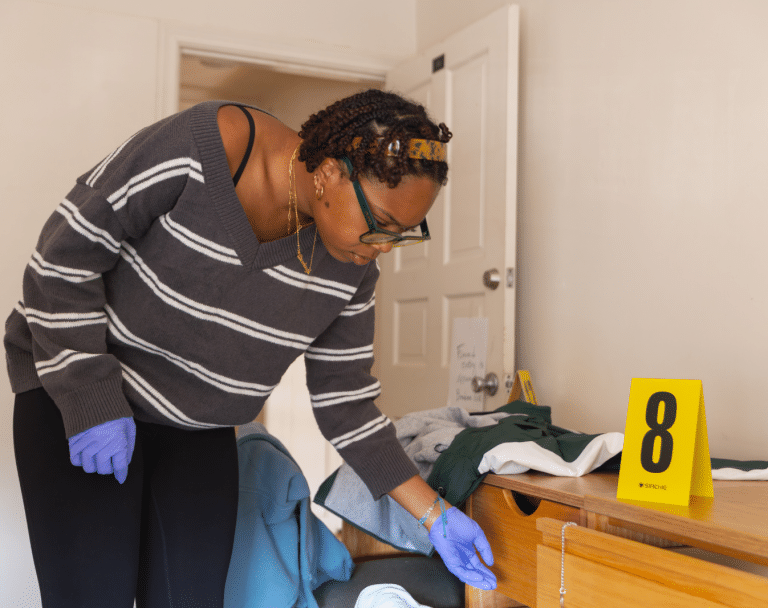
In late October, the inside of Pershing House had transformed into a scene of chaos. Everyday items were scattered on the floor, fake blood stained the walls and furniture, and a fake body lay still on the ground. The fabricated murder weapon, a knife, was hidden, waiting to be found and collected as evidence for the crime that had occurred.
This was the setup that 29 students from the CCJ 305.101: Criminal Investigation course found upon arrival. Armed with the knowledge they had developed over the semester, the students were assigned to examine the mock crime scene and practice gathering and analyzing evidence as criminal investigators.
The class was composed of Criminology & Criminal Justice majors and Criminalistics minors and was led by Dr. Lisa Layden, Assistant Professor of Criminology and Criminal Justice. After spending several weeks being prepped on how to collect and organize evidence, they were divided into groups of five or six and assigned a day to enter the mock scene on October 22, 27, or 29.
When they reached the scene, the groups were given information about the mock crime that had taken place. Once they completed a walkthrough and received their materials, including bags, pens, rulers, and cameras, they officially began their investigation.
“[Dr. Layden] gave us an opportunity to come into a crime scene and try to work as a group, work as a team, how you would be in the field, and get everyone together so you can see what evidence you want to collect, what blood is everywhere, and just stuff like that,” said Harry Reyes ‘29, a Criminology & Criminal Justice major with a Criminalistics minor.
Harry and his classmates worked together to swab for blood and located the murder weapon. The experience required them to work together, relying on their strengths and reaching conclusions about the scene and what was important to focus on.
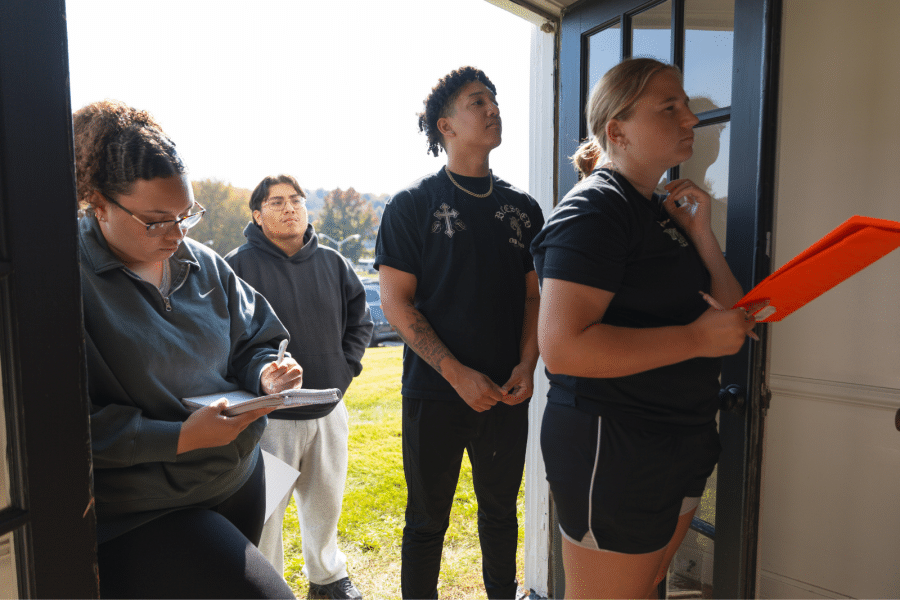
Another student, Marie Jordan ‘27, a Pre-Medical Science major with a minor in Criminalistics, shared the same sentiment. Being able to go around and actually see an example of what a crime scene actually looked like, deciding what was evidence, and having a grand moment of finding the murder weapon made the experience feel real to her and others. She enjoyed deducing how a scene unfolded and theorizing about what led to the placement of certain evidence.
That particular interest served as part of her inspiration for her major.
“I grew up watching “True Crime” and “Bones” and being able to watch them go into different crime scenes,” Marie said. “I know they’re not exactly true to what they do, but it’s interesting how they gather the evidence, and it will find out how this person was murdered and how they died, and being able to bring that person to justice.”
Having participated in a previous mock crime scene, Marie found such experiences valuable. Not only do they allow her to apply what she learned from her professors in a physical setting that mimics reality, but they also better prepare her for that line of work she hopes to go into.
“It’s extremely valuable because you’re actually able to put that into play,” she said. “It’s not just being told to you — you’re actually doing hands-on in there, doing it yourself.”
“Truthfully, I’m a hands-on type of person, so I feel like with these experiences, rather than just sitting in a classroom and listening to a lecture, I feel like trying to get the students out there and trying to give them a hands-on view is so much better than sitting down,” said Harry.
That was the hope Dr. Layden had for her students. Taking the experience beyond the classroom and having them actively engage in the work on a nice day can make the lessons they learn more impactful. This can also allow other skills to surface, such as teamwork and problem-solving.
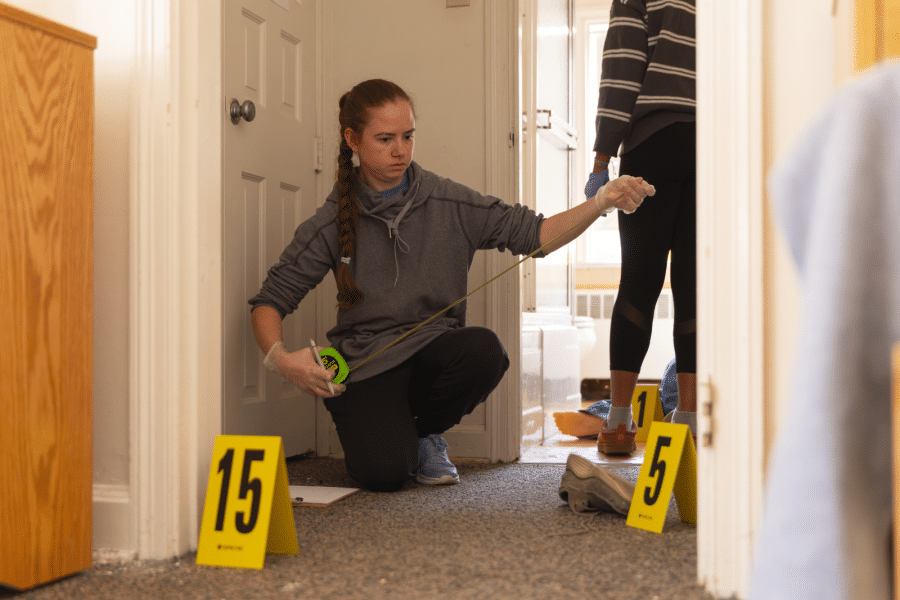
These are essential abilities that students will need for the lines of work they wish to pursue, and placing them in a lifelike scenario can truly take their education to the next level.
“The main goal was for students to apply the methods of evidence identification & collection and investigative techniques we learned and discussed in class,” Dr. Layden said. “It offers students a realistic experience — they are responsible for scene security, alerting the public through a press release in a timely manner, and making many decisions about documenting and collecting evidence. They must work together to thoroughly process the scene and incorporate everything they saw and learned on scene to write a comprehensive Crime Theory. They experience the stress and the reward of figuring out the crime.”
The students who participated in the exercise definitely walked away with a better understanding of the work they are doing and what it will require of them. But now, they can take that experience with them into their other classes and potential work as they continue working toward their degrees and goals.
“You’re [...] not just reading about it or being told about it; you’re actually able to do it yourself and be able to go in, collect evidence, see how a crime scene may actually look,” Marie said. “So when you actually go out to your job, you’re like, ‘Oh yeah, I remember doing this.’”
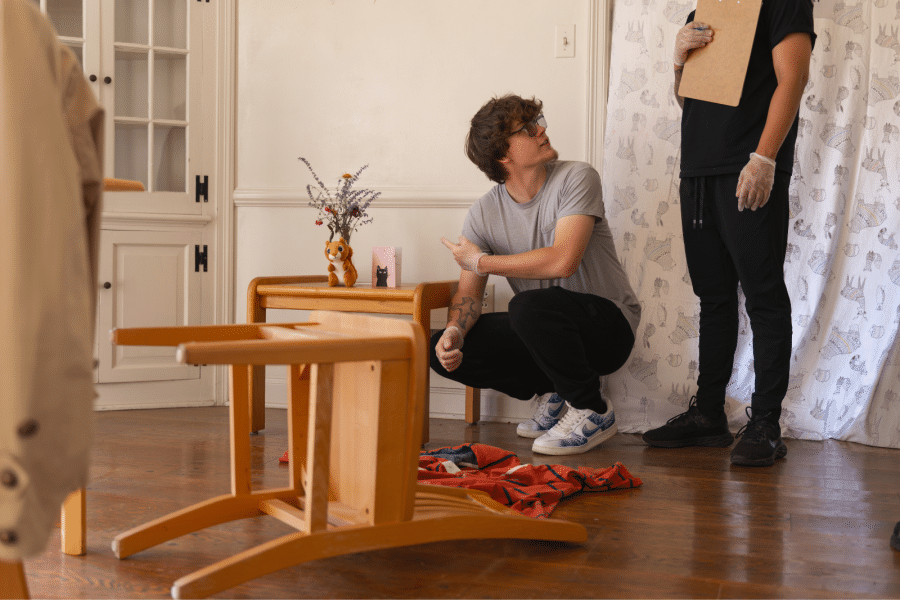
While some students may still be deciding what their paths ahead will look like, others are already looking forward to what will come next for them. So, gaining experience like this will be vital to forming an idea of what to expect in the future.
“For me personally, I want to go into the Drug Enforcement Agency, but I have to be a cop beforehand,” Harry said. “So these things will prepare me for being a cop and going to these scenes and seeing these crime scenes, trying to give me a basic rundown of what I will see.”
Now, thanks to the exercise, the students will have a great takeaway from their class and the lessons they were taught. They will have the opportunity to gain a fresh perspective on their work, which will encourage them to continue pursuing their passions and use their knowledge to the fullest.