Engineering the Future: YCP Students Get a Muddy, First-Hand Look at York County’s Infrastructure Evolution
YORK, PA – It’s one thing to calculate stream hydraulics on a whiteboard in a classroom; it’s another thing to stand in the mud and see those calculations holding back a riverbank.
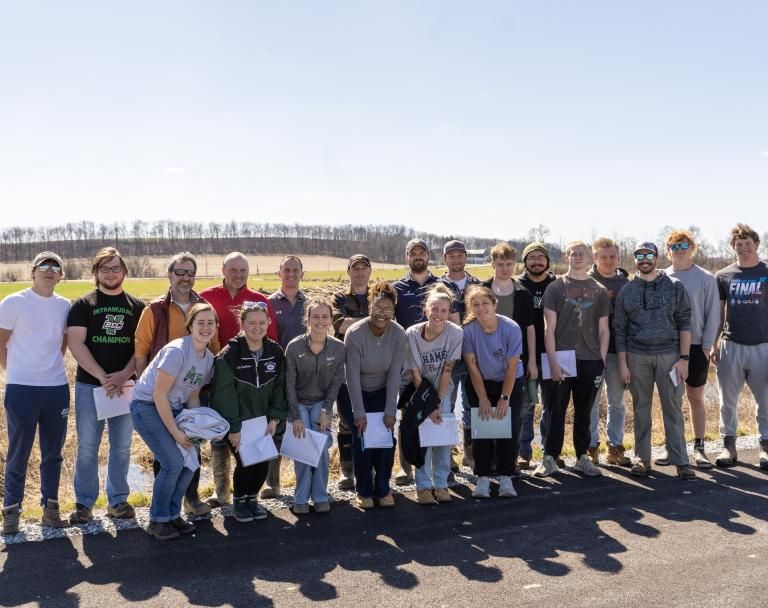
For the seniors in Dr. Josh Wyrick’s Advanced Water Resources Engineering class at York College of Pennsylvania, the recent field trip to the Hanover Trolley Trail was a glimpse into their future careers. The group got an exclusive, "under the hood" look at the massive Oil Creek restoration and the ongoing expansion of the Trolley Trail, both in York County.
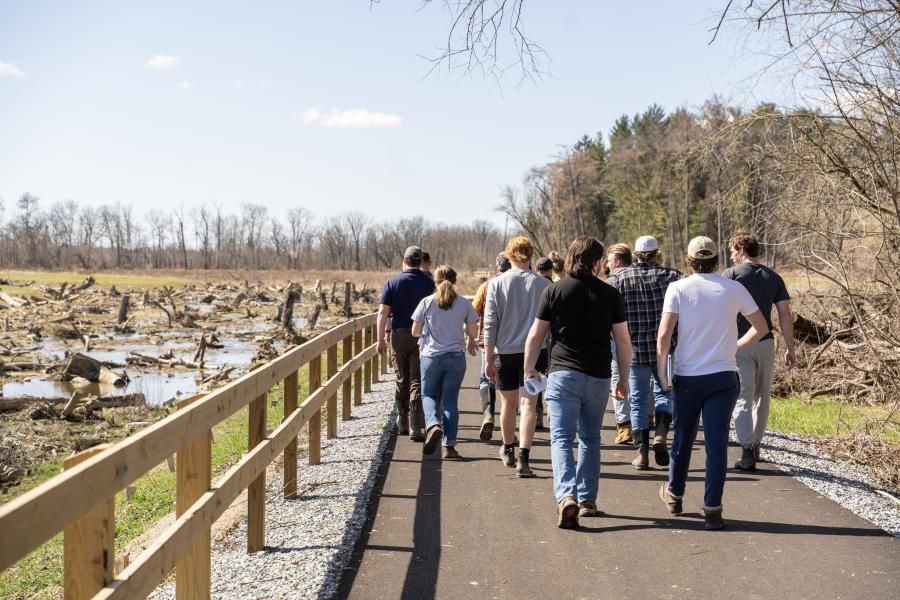
Dr. Wyrick has been tracking the Oil Creek project since Phase 1 wrapped up in 2024. He intentionally brought his students out to the Phase 2 site, although it was not the prettiest site.
"It was still muddy and messy," Wyrick admitted.
But for a budding civil engineer, the trip was by design. The site hadn't been covered in grass and trees yet, so students could actually see how the "floodplain restoration" design was working.
Instead of forcing the creek into a narrow channel, this design allows the water to spread out across the land. This slows the current down and prevents the kind of erosion that eats away at local trails. "The site was muddy, but the stream wasn't eroding away that mud," Wyrick noted.
By looking at the newly finished Phase 2 and then walking over to the lush, green Phase 1 site from last year, students like Claire Rumsey could see the full "before and after" of a major engineering feat.
“As engineering students, our co-ops tend to be much smaller pieces of larger projects,” Rumsey said. “It’s very easy to get caught up in our individual tasks and forget to see the bigger picture. Being able to observe a project we’re not involved in helps us understand how our decisions as engineers will affect the real world and why we’re making those decisions.”
One of the biggest takeaways for the students was about teamwork. The Oil Creek project only happened because a group of industry partners decided to think big.
When the creek started undermining the rail trail, engineers at CS Davidson went to work to fix the root of the problem. That led to a major collaboration with LandStudies and Kinsley Construction.
Seeing all these experts in one place gave the seniors a masterclass in how "big-picture" engineering actually gets done in the real world.
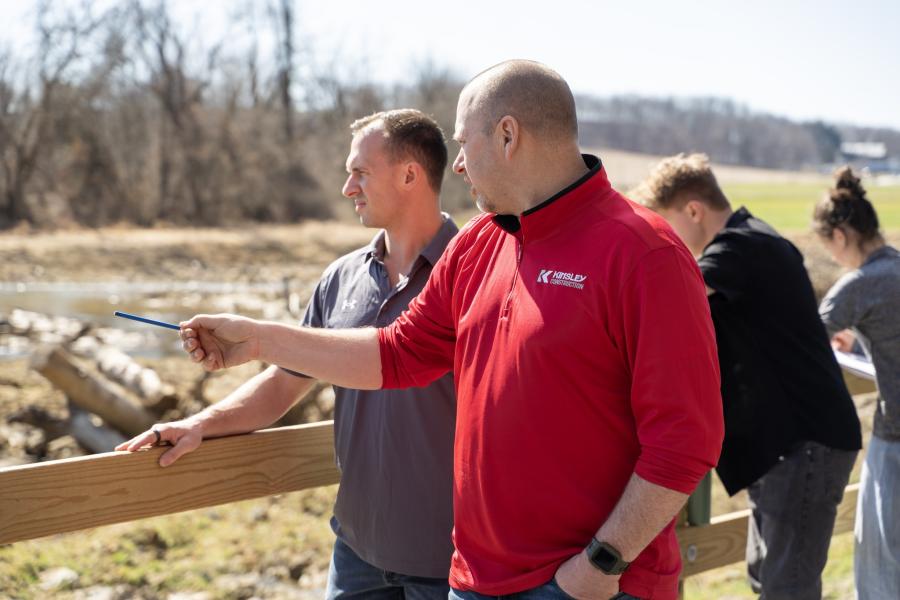
"The tour of the Hanover Trolley Trail with the York College engineering students was an excellent real-world experience into the nuances and difficulties faced between project stakeholders and the execution of a floodplain restoration project,” Nathan Irwin, Kinsley Environmental Site Vice President, said. “ We feel it's very important to connect with up-and-coming students as there will be a continued emphasis on floodplain and stream restoration projects in the future, especially those that offer recreational benefit and are multi-faceted with ever-growing constraints in project funding, land use and development, pollution reduction, and conservation practices. We hope field trips such as these will inspire and motivate future engineers to design, engineer, and help construct aquatic resource restoration projects and make a positive impact on their local communities and ecology.”
As these students prepare to graduate and start designing projects of their own, hands-on experiences like this bridge the gap between theory and practice. They walked away with a better understanding of how to manage water, protect our trails, and, perhaps most importantly, how to work together to solve a community problem.
It might have been a messy day in the field, but for the next generation of York’s civil engineers, the future is looking very clear.
Photo Credit: Kinsley Construction